Everything Adam Nash said on any show that made the record, most notable first. Each card names its show and opens the statement there.
Nash: Wealthfront bet delegators would trust software over human financial advisors
“The contrarian play behind Wealthfront was that people assumed that delegators wanted to work with people, and that do-it-yourselfers would do stuff online, do it themselves. And Wealthfront, no, no, actually, there's a new generation of people. They are very …”
Computers will outperform human financial advisors by 2026, predicts Adam Nash
“At Wealthfront, we actually believe that over the next 10 years, we're going to see computers do this better than their human counterparts.”
Automated financial advice will see major adoption by 2021, predicts Adam Nash
“Right now, people are fairly skeptical about this idea that we can move beyond automating investment and move to automating financial advice. But I think within the next three to five years, you're going to see phenomenal improvements in detailed, personalized…”
Mark Zuckerberg once argued having multiple online identities was intellectually dishonest
“Mark Zuckerberg was very adamant for a while that in the future there would be one profile online. There was a point where he thought it was almost intellectually dishonest to represent yourself in different ways online.”
Fintech 1.0 struggled with virality because financial accounts are inherently single-player
“I'm just gonna call fintech one-oh kind of what happened in the last 10 years. It was very much single player games. It made it very hard for fintech companies to authentically design products that had distribution built in that would lead to other people beca…”
Traits that enable founders to scale businesses hinder them from sharing control
“The attributes that tend to select for founders who end up building the scale businesses tend to select against people in some ways that scale particularly well in different dimensions. And one of the ways they don't scale well is, is quite that posture on how…”
Relying on bringing founders back to lead tech companies doesn't scale fundamentally
“And in tech, we just keep going back to like, well, you got to bring the founder back. There are a lot of incredible attributes to founders. That is not a solution that scales fundamentally.”
Product roadmaps should follow a 70-20-10 split for metrics, requests, and delight
“I end up in this seventy-twenty-ten kind of place where I say, look, spend most of your time on metrics movers. Carve out at least 20% of your time for customer requests. But 10%, five, 10%, you have a list of these delight features. Go do it.”
Retail investors underperform the market by 4.5 percentage points, says Adam Nash
“The doll bar research indicates that individuals underperform the market, not by 10 or 20 basis points, not by half a percent, but by four to four and a half percent, depending on the time period.”
Large companies rarely downsize fast enough to survive major market failures
“There clearly is some truth of the fact that economically, if a large organization can't achieve enough of a market, they rarely can downsize fast enough to keep the thing going.”
Nash: Tech observers suffer survivorship bias regarding enduring platforms
“We have a survivorship bias. We are remembering the big platforms that continue But what tends to happen is we lose focus on the last generation, two generations, three generations ago of winners, and a lot of them get folded in to other companies”
Amazon successfully absorbed eBay's marketplace model better than eBay copied Amazon
“My friends and colleagues from eBay, I don't want to upset them too much, but it does look like Amazon got the better end of that. They absorbed that innovation in a better way or more profitable way.”
Platform features fail unless developers get economic incentives and reference apps
“If you think like an operating system, you can't just roll out new functionality. New functionality does nothing unless developers actually build with it. And so you have to sometimes build apps yourself to show them how to do it. You build educational materia…”
Nash: Marketplaces should be designed as platforms, not applications
“My epiphany eBay was at least for a marketplace, it's really a platform. And what that means is that when you build new functionality and capabilities, it's not enough to think about what the app can now do. And it's not the same as an application where, of co…”
Nash: Professional networks offer immense value primarily to outbound roles
“When you work with the same people every day, it turns out there's a lot of substitutes for kind of a professional network. When your job is, if you're in sales, if you're in recruiting, there's a lot of, actually, you know, as an executive, entrepreneur, ther…”
Nash: Distinct user identities are valuable enough to support independent platforms
“People have different slices of their life. They have different identities, and there are some of those identities that are valuable enough to build independent platforms around.”
Nash: Product fights over features usually stem from strategic misalignment
“Almost all the product fights I've seen around at the
Execution level for feature design or prioritization actually stem from misalignment at the strategic level.”
Reid Hoffman stayed directly involved in LinkedIn's product as chairman
“Even as a fact, even when he stepped out of the CEO role and was chairman, he kept his hand pretty directly in product.
He might even argue too much at some times.”
LinkedIn had no mobile product strategy in 2009 beyond an intern's project
“So in 2009, I was handed LinkedIn mobile.
It had been literally a fun, innovative thing that one of the engineers had built.
We had an intern over the summer work on actually keeping it up, but we did not have a heavy focus on mobile.
And it was because when I…”
Nash: DIY retail investors resist fees, making sustainable fintech businesses difficult
“What Keqing had accidentally discovered was that the marketplace attracted do-it-yourselfers, but do-it-yourselfers have a problem. They don't want to put money into your system. They want to do it themselves. And by the way, they don't really want to pay anyt…”
Wealthfront pioneered automated ETF tax-loss harvesting and launched direct indexing in 2013
“Wealthfront was the first to do ETF tax loss harvesting automated. And then we did direct indexing. Direct indexing is so hot right now in the industry. It's 20, 24. Direct indexing is so hot. We launched it the end of 2013, my first year there, because it was…”
Financing is a hiring decision because misaligned investors force unnatural operational directions
“I always tell founders that financing is actually a hiring decision. The investors you have, the board you have, Incredibly path dependent. A lot of your opportunity depends on having the right people with the right motivations involved. You don't want to sell…”
Founders uniquely hold the power to confer moral authority on new executives
“One of the reasons founders get to do what they do is a level of moral authority, right? I built this company for X, or I never intended that, or I was there. I can tell you what, if the situation then was now, I would have done different things. These are kin…”
Early eBay evaluated every proposed product feature using three-year NPV financial spreadsheets
“EBay worked very much. They had an incredibly detailed financial spreadsheet that literally every feature we built went into a spreadsheet with a three year kind of NPV based that even built in eBay's cost of capital.”


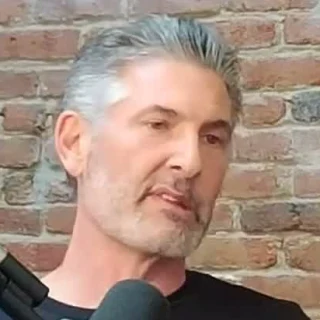 Adam Nash
 20VC 7
 IN DEPTHLEDGER