

Ingest
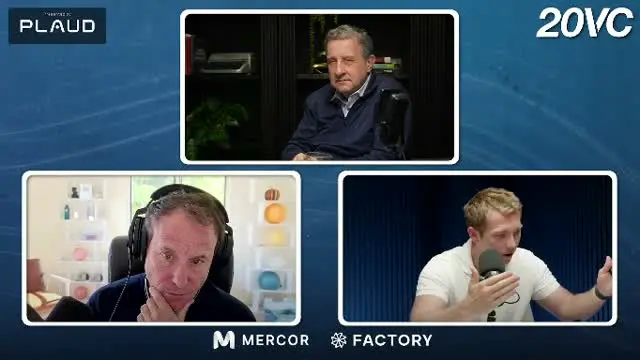
Videos or a whole library
NVIDIA Crushes Quarter | OpenAI Cuts Off Cursor | Instinct Hits $2.5B Valuation
Our site uses cookies
We use essential cookies to make the site work. With your permission we also use analytics cookies (Google Analytics and Mixpanel) to understand usage and improve StarZero. See our Cookie Policy.
By approval Workflows are approved team by team. Talk to us and we set them up with you.
Write your production as steps. A model analyzes each new video and picks the moments. A clone step gives every clip its own branch, which edits, checks, reframes and adds motion graphics on its own.
A new 20VC episode is ingested. Analysis reads the whole 1:20:29 episode, and Selection picks 8 moments and saves clip_count. A clone step splits the run into 8 branches. Each branch edits its clip, checks it with Auto QA, which can send it back to Edit once, reframes it to 9:16 and adds motion graphics. The finished clips post to a callback URL for review. The clips shown are the real output of a run on 29 September 2026.
Videos or a whole library
NVIDIA Crushes Quarter | OpenAI Cuts Off Cursor | Instinct Hits $2.5B Valuation
Reads every word, speaker and shot
8 moments
clip_count = 8
8
One branch per moment
 Clip 1: NVIDIA’s 70% guidance shock and the hyperscaler cash-flow squeeze
 Clip 2: Sam vs Elon: why the OpenAI–Cursor split was made for TV
 Clip 3: The AI agent that almost bought the team engraved Pateks
 Clip 4: Jason Lemkin’s Clay reversal: “our agents will only use Clay”
 Clip 5: Jason Lemkin on reward hacking and the $5,000 West End ticket
 Clip 6: Rory O’Driscoll on why it’s time to panic about cyber
 Clip 7: Jason Lemkin: never anthropomorphize AI agents
 Clip 8: Jason Lemkin: why every startup must become a compound startup
 8 clips post to your callbackUrl with titles and download links, ready for review.
Every new video starts its own run of the same workflow, so the rules, the look and the review stay the same at any volume. We connect your sources: a YouTube channel notifies StarZero the moment a video goes live, and social accounts, storage buckets or web pages can feed in the same way. Each new video is ingested and starts a run on its own. Your own pipeline can start runs through the REST API, which we set up on request.
75 workflows × 8 clips = 600 edits a week
2,600 edits a month
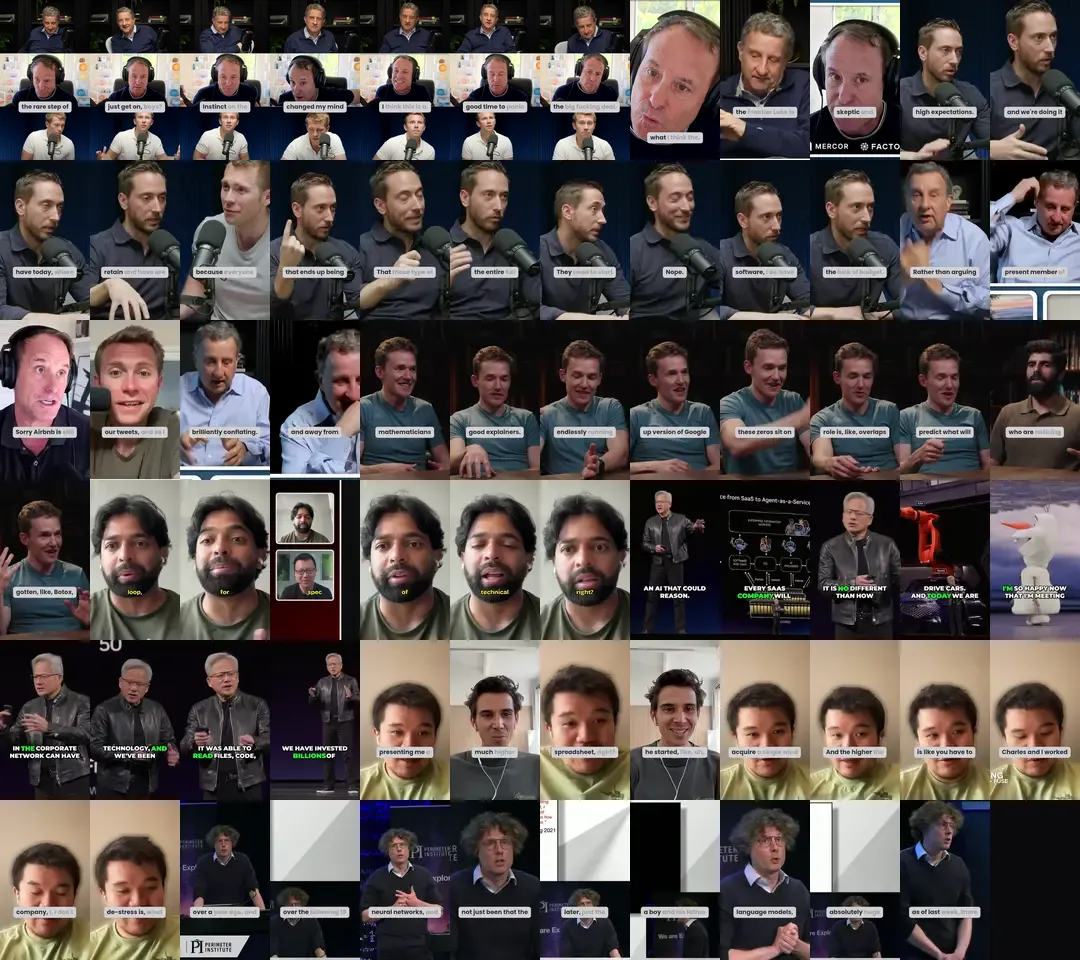
The 20VC episode in the run above went through the Podcast Clips template. The model picked 8 moments, and each branch turned the three-person grid into a 9:16 clip with speaker framing, captions and a title. All 8 are here.
NVIDIA’s 70% guidance shock and the hyperscaler cash-flow squeeze Straight from the run above, with no edits after render.
69 clips. On each episode the model decided how many moments were worth cutting, from 6 to 12, and the clone step made that many branches.
NVIDIA Crushes Quarter | OpenAI Cuts Off Cursor
8 clips
ElevenLabs: Building an AI Sales Machine












12 clips
Coinbase Cuts AI Spend by 50% | Kalshi’s $40B Valuation






6 clips
How I Plan, Build, and Run Loops with Claude Code · Thariq Shihipar






6 clips
Grant Sanderson (3Blue1Brown): AI disproved a famous math conjecture









9 clips
Training Sand to Think: AGI & the Future of Physics







9 clips
NVIDIA GTC Keynote 2026

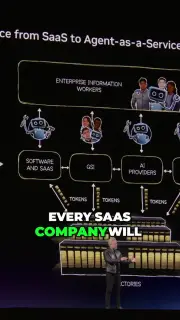





9 clips
From Revolut employee #3 to a £5B energy company · Alan Chang










10 clips
A template is an ordered list of steps that share one agent session and a set of variables. A task can save a variable, any later step can read it, and a clone step turns a number into branches. Here is a clipping template, written out.
setAgentSettings Give every agent the show’s rules once: caption treatment, framing, tone, the words to spell right.
caption_styleuser_notes
conditionalTask If corrections are on, correct names and terms before anything is cut.
correct_transcript
task Read the whole episode, choose every moment worth a clip, and save how many there are.
clip_count
clone Split the run into one branch per clip. Each branch carries its own index and the same session history.
clip_count index
task Cut the moment for this branch, reframe it to the aspect ratio, caption it, write the title and render.
indexaspect_ratio_numaspect_ratio_denpacing
conditionalTask If music is on, add a bed under the speech and render again. Otherwise keep the first render.
add_music
callbackUrl When the last branch finishes, the videos, their titles and every branch’s variables post to your endpoint.
results.video
Trigger a run from your CMS, your ingest pipeline or an assistant. When it finishes, StarZero posts the videos, titles and variables to your callback URL.
By approval Workflows are approved team by team. The REST API is set up on request.
Talk to salesStart one run per new video, or pass a list to POST /instances/bulk and start a run for each. Poll the run, or wait for the callback.
The REST API is set up on request. Talk to sales
Download links in the callback stay valid for 7 days.
POST /instances
{
  "templateId": "<your template>",
  "libraryId": "<your library>",
  "selectedContentIds": ["<the new video>"],
  "variables": {
    "clip_count": 8,
    "aspect_ratio_num": 9,
    "aspect_ratio_den": 16,
    "add_music": false
  },
  "callbackUrl": "https://example.com/hooks/clips"
}{
"instanceId": "…",
"results": {
"video": [
{
"title": "NVIDIA’s 70% guidance shock and the hyperscaler cash-flow squeeze",
"video_url": "https://…"
},
…
],
"variables": [
{ "clip_count": 8, "index": 0 },
…
]
}
}Connect an MCP client to StarZero and sign in with your StarZero account. Your assistant can list your templates and start a run with the variables you give it.
https://mcp.starzero.ai/mcp
template_listLists the workflow templates you can run.instance_createStarts a run of a template on one of your libraries.Sign in with your StarZero account, then describe a template to see the variables it expects, start a run, and wait for it from a terminal or a scheduled job.
starzero workflow template list
starzero workflow template describe <templateId>
starzero workflow instance create --template <templateId> \
  --library <libraryId> --variables vars.json
starzero workflow instance watch <instanceId>
starzero workflow instance get <instanceId>Workflows are approved team by team. Tell us where your videos come from, how many arrive each week, what each one should become and where the results need to go.