Insight
Doshi: High Performers Must Excel Even Under Mediocre or Absentee Managers
“When it comes to yourself, you should turn yourself into a person who can do really good work, even without having a great manager. Even if you have an okay or absentee manager, you should turn yourself into a person who can do really great work.”
Insight
Doshi: Optimizing for ROI Causes Product Teams to Build Safe Me-Too Products
“What that leads to is a lot of me too products. It leads to us kind of just meeting table stakes. It leads to kind of picking the safe things. Because the safe things are you know, easy to quantify and they're safe because they're easy to quantify. And look, I…”
Insight
Doshi: Demanding metrics before taking action causes hidden organizational damage
“Used in the wrong context, they tend to you know, cause a lot of damage that we don't even realize, because we feel like we're being smart when we say, oh, this thing must be measured before we can improve it.”
Insight
Doshi: Qualitative evaluation is often enough when measurement costs are too high
“In some cases, the effort To measure something is so large that it sometimes dissuades us from performing the action that makes sense. The fundamental sort of observation here is that sometimes evaluating how something is going is enough.”
Insight
Doshi: Great teams need only a few high-agency people to drive impact
“You don't need the entire team to be extremely high agency, but the ability of at least a few individuals on the team to have and embody this high agency approach such that, oh, actually, yes, we do have this obstacle, but here's how we're going to creatively …”
Insight
Doshi: Hire High-Agency 'Go-Getters' Over 'Frustrated Geniuses' in Ambiguous Roles
“Given a choice between hiring a frustrated genius and hiring a go-getter if it is a role that has a high degree of ambiguity, I would rather hire the go-getter than the frustrated genius, because I know the go-getter will work hard to resolve the ambiguity ver…”
Insight
Doshi: Software Code Is Too Inflexible to Rely on Easy Backtracking
“Our code is not as malleable that as we think. Right? We just think, oh, we're going to write this code, ship it, and then, ah, if it doesn't work, we're going to undo it. We're going to change it. We're going to learn, et cetera, and all of that is good. But …”
Insight
Doshi: Team conflict stems from communicating at mismatched organizational levels
“Oftentimes conflict between people and teams arises mainly because we're not talking at the same level. And we might have you know, similar missions and similar goals and OKRs and whatnot. But if we are not aligned on the level at which we are talking, that ca…”
Insight
Doshi: Product managers lose executive audiences by leading with execution details
“If you come into this kind of product review as the product manager and you kind of drown the group in all sorts of execution level detail, which you think are the right things to share, because these are challenges you're facing right now. If you lead with th…”
Insight
Doshi: Dismissing Teams as Optics-Focused Destroys Cross-Functional Collaboration
“It was easy for me to judge Other individuals or other teams saying like, oh, these people are only focused on optics, whereas I am focused on impact and execution, which are the right things to be focused on. And when you start with that sort of feeling, it d…”
Insight
Doshi: Playbooks become standard over time, outperformance always requires judgment
“If everybody could just follow playbooks then you know, and they might be wonderful playbooks, but over time, even wonderful playbooks become the industry standard. So now if you want to outperform, you need something else, and that something else is always ju…”
Insight
Doshi: Written culture enables permissionless organizational communication
“When you have a writing culture, it becomes more of a permissionless environment. You know, say non-writing culture where perhaps the way big decisions are made or proposals are shared, it's usually in some meeting where perhaps you know, we have a discussion …”
Insight
Doshi: Document-driven cultures handicap poor writers from exerting influence
“One of the challenges is that such a culture makes it hard for people who kind of Think they're not a good writer to be able to influence, right? Because ultimately, you know, any form of communication in an organizational setting is a form of influence”
Insight
Doshi: Overloading business docs to build 'bulletproof' cases loses readers
“The reason that some folks do this when they are writing is because they want to communicate everything they know about this topic. And of course, when we do that, the story we tell ourselves is, oh, I want to build a bulletproof case, right? So I'm going to p…”
Insight
Doshi: High Performers Should Train Themselves to Learn Without Entertainment
“What you should do, if you want to optimize and maximize outcomes, and your impact on the world, is you should turn yourself into the kind of person that doesn't need any sort of entertainment, right? To learn something, right?”
Insight
Doshi: Product sense decomposes into cognitive empathy, domain knowledge, and creativity
“Product sense has three components. The first is cognitive empathy. Which is, do I understand how you think as a user, how customers think, how they approach situations, what will resonate for them or not, right? That is cognitive empathy. Second is domain kno…”
Disclosure
Doshi: Stripe B2B features used qualitative feedback to track long-term impact
“And I did this a lot at Stripe, for instance, when we were working on B to B products, that, you know, in some cases, they took a year or year plus to show direct revenue impact or volume impact, is I would call out some very big customers that we were able to…”
Assertion Not checkable as stated
Doshi: Stripe co-founders regularly conducted user research with frontline staff
“Patrick and John, until a very, very long time, as the company was scaling, and to a point where you wouldn't expect the founder to do so they were talking to customers. They were talking to users, and not only that, in many cases, they would kind of, you know…”


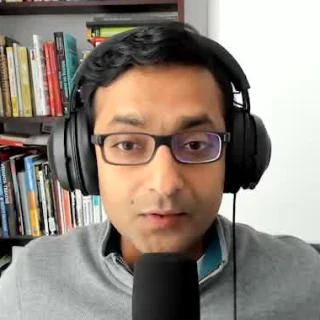 Shreyas Doshi